Friday, September 19, 2014

Pointing a finger at secularists: A response to Teotonio de Souza


It is always a tragedy when an argument is misunderstood. Something of the sort seems to have happened when Teotonio de Souza, in his op-ed column in this paper (2September, 2014), mounted a critique of my denunciation of the Goa Government’s Sant Sohirobanath project.  The immediate concern was the government’s decision to rename the Government College of Pernem after the Sant. 


According to de Souza, I drew up a comparison between Sant Sohirobanath and St Francis Xavier to argue that Sant Sohirobanath served the saffronisation of Goan culture by the State in violation of constitutionally guaranteed secularism, while suggesting that the state’s administrative assistance in the exposition of the relics of St. Francis Xavier was, “well within the bounds of secular ethics.” In reality, I said no such thing.

My effort was to distinguish between the manner the state has unilaterally taken it on itself to pluck the Sant out of relative obscurity, while in the case of the Exposition, there is a non-statal body that actively organises the event and receives the state’s support in organising it, post factum. As a student of the manner in which states across the world deal with the challenge of secularism, I am well aware of the delicate balance that is involved every time the state steps in to intervene in religious affairs. As such, my argument was much more cautious than de Souza makes it out to be.

de Souza suggests among other things that I was “misusing” the figure of St. Francis Xavier and crafting an imaginary scenario possibly with the intention of stoking communal tensions. The truth, however, is that I did not produce the comparison with St. Xavier out of thin air, but within the very real context of the position of secularism in India and Goa. Hindu nationalists have systematically raised the cry of “minority appeasement” in the context of state support of non-Hindu institutions or events. Their loud clamouring against this support is then used to justify further patronage to Hindu institutions and events. Perhaps de Souza would have preferred had I pointed out that the services that the state of Goa offers to the Exposition is similar to the kind of service that it offers to the zatras, especially the more important ones, across the state. Indeed, in retrospect, I realise that I ought to have included these examples as well.

Nevertheless, the very fact, that I may have needed to also talk about Hindu feasts to justify my argument and thus make it sound secular, is illustrative of the burden under which non-Hindu and non-upper castes persons in this country labour when trying to secure space in the public sphere. Indeed, whenever minoritised groups raise arguments critical to establishing an egalitarian system, they are accused of engaging in identitarian politics, or, as de Souza phrases it, “not more than politics of culture”. It needs to be pointed out that the so-called identity politics is not merely about identities alone but in fact fundamentally about distributive justice.


Even though de Souza would have readers believe that I think the state’s association with the Exposition is “well within the bounds of secular ethics” -- I am not entirely sure that it is. It was because of my doubts about the nature of this association that I was so restrained in presenting the Exposition as an example. In very many ways, the State not only offers assistance to the Catholic ecclesiastical hierarchy in the organisation of the event, but also uses the event in many ways. In addition to the symbology of being one of the more significant patrons, the state government also exploits the Exposition for its value to the tourist industry, just as it has now begun to milk the bigger Goan temples for their interest to tourists. To make this argument is not to necessarily or unilaterally condemn the practice, but to highlight something uncomfortable in this arrangement. As the work of scholars such as Talal Asad demonstrates, such discomfort is an integral part of the problem of secularism. Our job is to see how we can enable the possible resolutions of the dilemmas that inevitably present themselves in the operation of this imperfect system.


In addition to accusing me of attempting “to put a wedge that could promote conflict between the Hindu and the Catholic communities” de Souza also claims that I am trying to “divide the Hindu community by presenting Sant Sohirobanath as a symbol of high Marathi culture, and not representative of the Bahujan Samaj.” Once again, he misunderstands and misrepresents my argument. There are already historical and contemporary divisions among those who call themselves Hindu. Postcolonial Goan history is the history of the assertion of the Bahujan samaj in Goa against the dominance of the Saraswat Brahmins. Further, I was not presenting the Sant as a symbol of high Marathi culture, but rather pointing to the manner in which the Sant is being co-opted to aid Saraswat, and brahmanical, hegemony in Goa. I was trying to draw attention to the point that there is no single strand of Marathi culture in Goa, but multiple strands. To this extent my aim is to make explore the varied dimensions of Marathi culture in Goa. Too often this culture is presented as a monolithic monster that Goans, and especially Catholics in Goa, should be afraid of. To be sure, crafting monolithic identities of Catholic and Hindu (as he does) does more to fuel communal tensions. These monolithic identities occlude the similar interests that bahujan of both faith traditions and impoverish political imagination.

Having addressed most of de Souza’s specific comments, it is now time to reflect on the overall thrust of his article. It is significant that de Souza did not take any position vis-à-vis the project at the heart of my discussion, viz. the renaming of the college after Sant Sohirobanath. His silence seems to imply approval of the project. This position would not be surprising given that de Souza generally speaks in the voice of the upper-caste secular nationalist. This is a voice that would prefer that discussions of caste-based oppression not be spoken about, prefers identities to be national and sees the nation as composed of monolithic religious groups who are ideally represented by upper-caste members of that faith tradition. When voices do speak up against the upper-caste Hindu biases of state governance, Indian secular nationalism dismisses it as identity politics, just as de Souza does my arguments. This dismissal is effected not only by Hindu nationalists, but also the dominant elites within these minoritised groups; the latter fearful that their privileges as representatives of the faith tradition will be challenged.

With this understanding of the operation of Indian secularism, de Souza’s position is not surprising. Learning from the recent past indicates that contemporary Goa needs to negotiate different ways to secure a secular environment, one that is honest about the fractures and systemic injustices in our society. Simply sweeping them under the carpet and celebrating the largely upper-caste bonhomie across religions alone is not going to work.

(A version of this post was first published in the O Heraldo dated 19 Sept 2014
I would like to acknowledge the useful comments of my colleagues in the Al Zulaij Collective. )

Friday, September 5, 2014

Rights trump culture: Lessons in fighting Hindutva


There was a significant amount of virtual rejoicing some weeks ago when the vice-president of the state BJP unit, Wilfred Mesquita, announced that "Prohibition cannot come to Goa... because Goa's culture is to drink." Mesquita’s statement came in the wake of a number of recent controversies involved with moral policing both within the country and also in Goa. Both Chief Minister Parrikar and his colleague Sudhin Dhavalikar had expressed opinions about the need to ban the consumption of alcohol in public. Given that the state government of Kerala had announced a decision to enforced a gradual prohibition of alcohol in that state, and the abandon with which the Hindu right has been going about its agenda of cultural rectification of the country the Dhavalikar-Parrikar comments understandably unnerved many in the state.
We owe a debt of gratitude to Dr. Mesquita for having had the moral courage and the good sense to point out that prohibition is out of the question when alcohol is a part of the social rituals among a good portion of the Goan public. May he live long and prosper.
As relieved as we may be by Misquita's statement, it needs to be pointed out that basing the decision to not ban the consumption of alcohol on the basis of its presence in “culture” is not a reassuring fact. Indeed, such a logic is problematic because it is still very much within the Hindutva realm of reasoning.

Hindu nationalism is a cultural nationalism. This is to say that it is a nationalism that privileges culture (as defined by Hindu nationalists) first. All else, including rights, comes after this definition of culture. The opposition to prohibiting an act on the basis of culture is to give primacy to culture, not to rights. Thus, what would happen if there was no culture of social drinking in Goa? Would it be ok to ban drinking then?

This question is important because it is at the root of determining the extent of the censorship powers of the State. The question is one of the extent of the powers of the state to curtail activities of persons, and of the recognition of right of the individual to choose. If I choose to drink, then regardless of whether it is a part of our culture or not, I should be able to drink, and have the right to purchase alcohol for consumption.

Phrasing the question in terms of alcohol, whose consumption is marred by instances of alcoholism, is not the best way to phrase a question of rights. Indeed, members of the right often use the most extreme example to make their case and carry through decisions. If we replaced alcohol with skirts, for example, we may see the dangers involved in invoking culture as the basis to allow, or prohibit an activity. If the wearing of skirts were not commonplace among women in Goa, would it be legitimate to ban the wearing of skirts? Of course not, because one would then be treading on the rights of women to wear skirts should they choose to do so. The law is known to place reasonable restrictions on the rights that citizens enjoy. Should one gravely inconvenience others provisions already exist to remand persons causing a nuisance through drunken behaviour. In the presence of this reasonable restriction the introduction of prohibition does nothing more than allow for the state to exercise unreasonable authority over the ordinary lives of people.

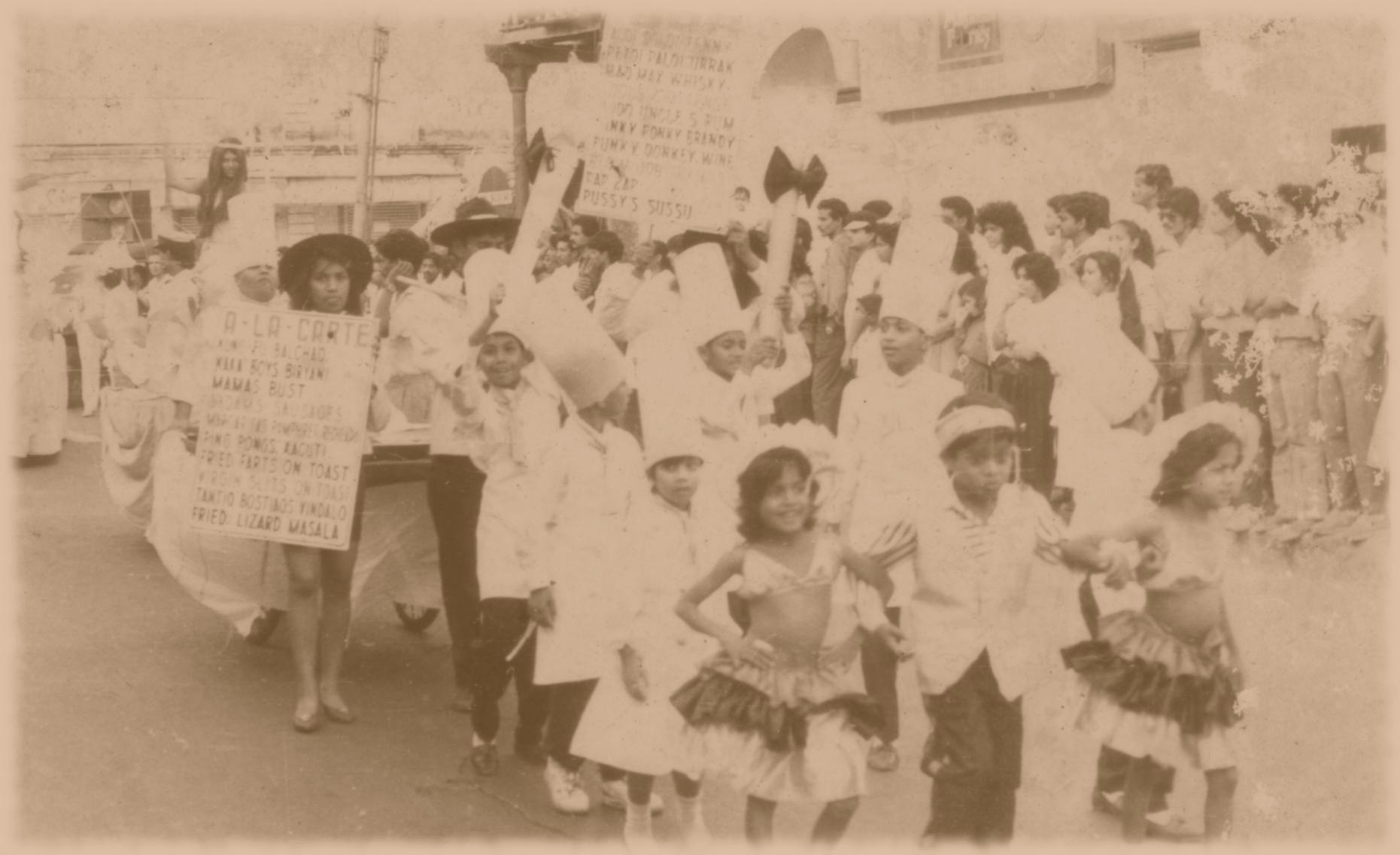
Problematising culture as a way to attack or defend culture also helps to make us aware how institutions that are today crying foul, have been a part of the gradual drift towards the right. Back in the 1980s, the hierarchy of the Catholic Church in Goa came out strongly against the celebration of Carnaval insisting that it was not a Catholic celebration. Indeed, it did so more recently, once again when Parrikar waded into debates on what is or is not appropriate local culture. In doing so the hierarchy sought to delegitimise Carnaval celebrations. In doing so they were committing a number of errors that haunt us today and will no doubt haunt us in the future. The hierarchy was effectively suggesting that only the religious lives of the Catholics in Goa was worthy of respect. The rest could be dismissed and done away with. They were also setting themselves up as the determiners of all cultural activities that persons who confess the Catholic faith engage in. This was, and continue to be a dangerous position. As much as the Catholic Church has a right to advise its members on the manner of their comportment, it cannot determine what is, or is not part, of the activity of Catholics in Goa. While the hierarchy of the Catholic Church in Goa may not be fond of carnival, it ought to have taken a broader perspective and indicated that while Carnaval was not a Catholic religious feast, and the hierarchy had reservations with regard to some of the ways in which it is celebrated, it would not deny that Carnaval is a significant celebration with historical roots in Goa, and especially among Catholics in Goa. We live in a complex world and the only way in which we can prevent institutions, both statal and otherwise, from becoming autocratic monsters is by paying close attention to the rights of individuals.

Despite making culture the basis on which he dismissed the prohibition of alcohol, Mesquita also needs to be congratulated for not making the social consumption of alcohol a feature of Catholics alone. Almost all reports indicate that his statement was “Goans drink at wedding and parties. How can it be banned?” Thus, it was not Catholics drink at social events, but Goans.  This makes sense given that it is not merely Catholicism that determines whether people drink alcohol socially or not, since people were fermenting and producing alcohol long before both Europeans and Christians came to this territory. The European, and possibly Christian, origins of the consumption of alcohol is just one strand in the history of alcohol consumption in the territory.

To return to the thrust of my argument, making culture the basis on which decisions are made will also push us further into the ire of the Hindutva tiger. Given that it is the non-brahmanical culture of Goa that they see as a problem, decisions to protect certain social activities on the basis of culture will work to only strengthen the resolve of these groups to attack the cultural manifestations of Catholics, and other non-brahmanical groups, in Goa. We need to turn the tables on the forces of the right (which includes not merely the forces of Hindutva) and assert that rights are the basis of public policy.

Mesquita's statement may have won us the battle therefore, but will it win us the war?

(A version of this post was first published in the O Heraldo on 5 Sept 2014)

Friday, August 22, 2014

Sant Sohirobanath and secular death


I read with some concern the news that the Government of Goa is officially celebrating the tercentenary of the birth of Sant Sohirobanath Ambiye. Towards this end, the government has chosen to rename the Government College in Pernem Sant Sohirobanath Ambiye College of Art and Commerce, publish a compilation of his works, as well as establish a chair in his name at Goa University for research in Marathi language and Goan Marathi literature.

All of these actions are a matter of grave concern not only because they violate the constitutionally guaranteed secular character of the Indian state, but because it also represents the creeping manner in which recent times have seen a systematic saffronisation of cultural space within Goa.

While there are many understandings of what secularism constitutes, the common sense understanding within India is that the State will desist from promoting one religious tradition over others. In the case of renaming the college of Pernem, this understanding of secularism is exactly what the government of Goa has violated. This act of the state government has privileged a Hindu faith tradition over all other traditions within the State (and the country). It would be unthinkable that a Muslim or Christian saint would be honoured by the Indian or Goan state in this manner. To do so would raise cries of “pandering to minorities” and “pseudo-secularism”.  Given that similarity of treatment is fundamental to the practice of secularism, it seems that state government must necessarily change its decision regarding the renaming of the Government College in Pernem.

But this is not the first time that the state government has demonstrated its bias in promoting a particular brand of Hindu faith traditions. The choice of Sant Sohirobanath does not seem to be innocent, but part of a larger trend where members of the Saraswat caste have been held up as embodiments of Hindu culture, which is then passed off as Goan culture. Take, for example, the manner in which under the earlier tenure of Chief Minister Parrikar, in 2002, his government sought to commemorate the 125 birth centenary of Varde Valaukikar, also known as Shenoi Goembab, as Konkani Asmitai year. While Valaulikar has garnered some fame as a proponent of the Konkani language in the Nagri script, what has largely been suppressed is the fact that he was an activist for the Saraswat caste who sought to create a space for this caste group in the city of Bombay. This action was part of a larger movement that sought the creation of a homeland for the Saraswats in Goa, with the specific intent of allowing them to dominate it as their fiefdom.

There is also the choice of D.D. Kossambi whose name has been employed to distinguish the ‘Festival of Ideas’ that the state government has organised in Goa since 2008. In itself this particular action is innocuous, and yet when viewed with the other choices of the state government one begins to see a larger pattern through which Saraswat  patriarchal figures alone are identified as worthy of honour. There have been other men who have been honoured, but as in the case of the naming of the auditorium of the Ravindra Bhavan in Margão, this has often been after a bitter struggle for such recognition by bahujan groups.

More disturbing is the choice of the relatively unknown figure of Krishnadas Shama to identify Goa’s premier intellectual centre, the Central Library. Set up under the Portuguese rule, this institution benefitted tremendously from the efforts of a number of native sons, not least of whom was Ismael Gracias, a significant curator of this public institution. Given that secularism has often accompanied a republican culture that privileges persons who distinguish themselves in the realm of public service, it is a shame that individuals like Gracias were passed over in favour of Shama. In fact, not much is known about Shama except that he is the possible author of brahmanical texts, like the Mahabharata, in proto-Konkani. While Konkani nationalists have chosen to promote Shama as the father of the Konkani language, this is merely a dubious assertion given that Shama could have been associated with propagating brahamanical myths among a local population that was profoundly influenced by Jainism, Buddhism and Islam. To this extent, Shama too emerges not as a secular figure, but one aligned with promoting brahmanical hegemony. With this history in mind, it appears that this choice of Shama is in keeping with the Sangh Parivar’s attempts to brahmanise Hinduism, destroying all other forms of non-brahmanical Hinduism, and leaving brahmanical groups in complete control of this complex faith tradition.

Add to this the choice of the state government to name one of the stadia set up for the Lusophone games after Syama Prasad Mookherji, founder of the Bharatiya Jana Sangh, and an associate of the RSS. 

The choice to name the college after this brahmin saint should also be seen in the manner in which the Parrikar-led government sought to hand over government schools to RSS-backed ‘educational’ institutions. Clearly, through these various choices in naming public institutions, the Parrikar-led BJP government is seeking to create a legitimacy for the RSS and its program of Hindutva.

Seen in light of these various facts, it becomes obvious that the celebration of the centenary of this largely 
anonymous Sant Sohirobanath, is a part of a larger programme to saffronise the Goan public sphere. In his defence of the state government’s decision to officially celebrate the centenary of this saint, Nandkumar Kamat has suggested that “Saints of all religions belong to the whole mankind [sic because their sainthood helps us all to be good human beings.” While this may be true in principle, under a secular regime the choice of integrating them into daily life is an option of individuals, not an obligation of the state. The government in this case is integrating this saint into the official culture of the territory.

Persons who would object to the protest we mount in this letter would no doubt point to continued state support for the exposition of the relics of St. Francis Xavier every decade. There is a difference, however, in that as far as my understanding goes, the exposition of Saint Xavier is organised by the church, and the state steps in largely to coordinate public order. The initiative rests largely with the Catholic Church which is the primary celebrant. In the case of Sant Sohirobanath on the other hand, it appears that it is not a civil society organisation that is seeking the support of the state, but the state that has taken it upon itself to celebrate the event officially. This is a crucial distinction and must be underscored.

The action of the state government is not merely a violation of the secular nature of the state, but tantamount to laying the grounds for communal conflict in Goa. With its choice of setting up a chair in the Goa University under the name of this saint for the study of Marathi literature in Goa, the state government is effectively further saffronising Marathi culture and literature in Goa. Most people will recollect the manner in which ever since the 1960s the Marathi language had been twined with Hindu nationalism in Goa. However, it should not be forgotten that while Marathi in Goa has a brahmanical heritage, it also was, and continues to be, the language of dalit-bahujan assertion against brahmanical hegemony in our state. To this extent, the Marathi language can also be the source of a profound commitment to a secular polity. To name a chair after a religious figure pollutes the secular aspects of the tradition of the Marathi language in Goa, and complicates the resolution of historical differences that since at least 1961 have deliberately sough to keep Hindu and Catholic bahujan suspicious of each other’s traditions.

The renaming and other celebrations of Sant Sohirobanath by the government of Goa must be protested vociferously, not merely because it violates the secular fabric of constitutional governance in the state, but also because it is part of a blatantly casteist agenda in Goa.

(A version of this post was first published in the O Heraldo on 22 Aug 2014)

Saturday, August 9, 2014

The Itinerant: Claiming the Indo-Portuguese for Goan museums


Every year the Portuguese Association of Antiquarians (APA) holds the Feira de Arte e Antiguidades de Lisboa, a fair that unites antiquarians from across Portugal for a week-long sale of antiques and other slightly aged objects d’art. 

It was at one such exhibition that I became overwhelmed with emotion on seeing an exhibit. The object of this emotional excess was a chest of drawers that formerly stood in the sacristy of the church of Nossa Senhora da Graça adjoining the Augustinian monastery in Old Goa. This chest screams out its Indo-Portuguese heritage, marked as it is by inlay work, elaborate handles and the Augustinian symbol of the double-headed eagle. A year later, at the subsequent Feira this chest was once again on sale. It had clearly not found a buyer the year before.

Caressing the chest on the second year a thought that first struck me the year before recurred, why should the state of Goa, through its State Museum, or Department of Archaeology, or indeed the Directorate of Art and Culture not purchase such a fine, and restored, work of art? The object started its life in Goa, and was clearly worked on by local artisans. In itself a fine piece, its provenance would add value not merely to the holdings of the State Museum but perhaps spur us on to rethink our own international location vis-à-vis the art form that is called “Indo-Portuguese”.

In the year 2013 a rather unique object was up for sale at an auction conducted by Sotheby’s. Titled Caquesseitao or 'ancestors of the devil', this object, said to have probably been modelled on a fruit bat, was a container made entirely of silver with bird-like feet, scale-chased body, dragon head, prominent tongue and hinged wings. While apparently a popular ornament in Indo-Portuguese art in the late 17th-early 18th century, there seem to be very few exemplars remaining. Because the Portuguese state did not have a representative of the ornament, Portugal’s National Museum of Antique Art (MNAA) was authorised to purchase the object in auction. The tale ended sadly, however, since the institution was authorised to procure it for a sum less than the 181,500 Euros for which it was eventually auctioned.

There are two points that I seek to make here. The first is that despite its bungling of the purchase, the Portuguese state was actively interested in acquiring the object, since it sees the Indo-Portuguese as a part of its own oeuvre. This is to say, we have the example of a state actively committed to spending large amounts of money to assemble a cache of wealth in the public interest. 

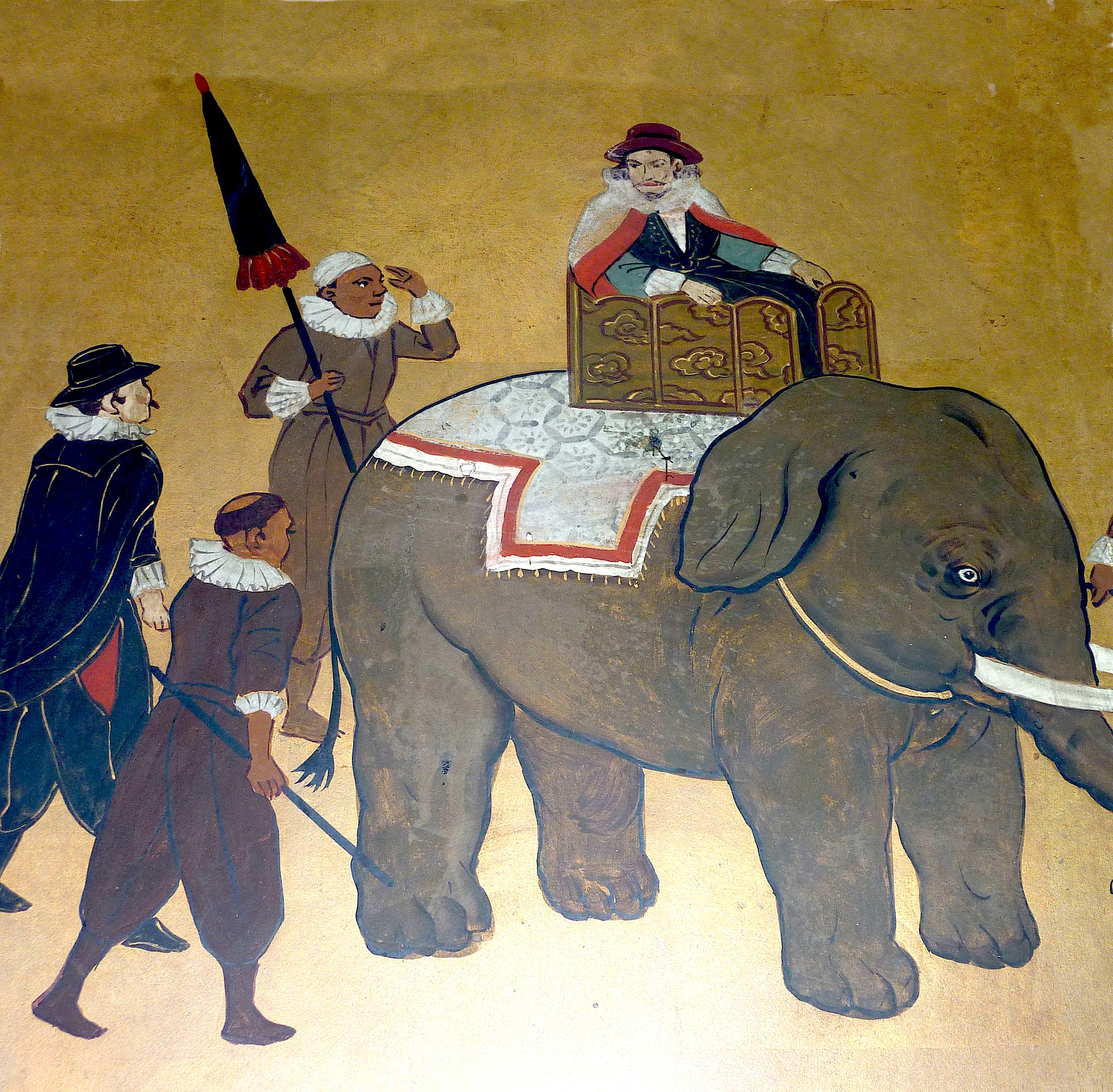
The second point that I seek to make is about ownership. Merely because the Portuguese claim this history as a part of their own does not mean that the contemporary state of Goa, once seat of the Indo-Portuguese world should wash its hand off of this heritage. On the contrary, the state of Goa, as a location that continues to enjoy international attention ought to make its own efforts to appropriate this history for itself. The history of Indo-Portuguese Empire is both Portuguese and Indo (i.e. South Asian). It was crafted by not only by different kinds of Portuguese, Europeans, and also by different kinds of Asians, South Asians and natives of Goa, all of who operated within a system that had its nerve centre in the city of Goa.

Born in the subcontinent, and with a specific location in Goa, both of the objects discussed in this column should rightly be the kinds of objects on the state government’s list of ideal acquisitions for the Goa State Museum. Despite the fact that the State Government seems to be contemplating putting its existing antiques away in storage, the fact is that the State government has, through the Directorate of Art and Culture, been spending a good amount of money in acquiring art works from Goan artists.

Extending its operation to acquiring, and displaying, these kinds of older art works would allow the state of Goa to achieve a number of goals. To begin with, it would allow us to claim ownership of art forms that emerged from the genius of artisans of the past, and would allow contemporary artists the stimulus for a more exuberant dialogue with the past. Secondly, the acquisition of history and artifacts is not merely the preoccupation of bored rich people. On the contrary, it is the basis for the generation of further and future wealth. For example, at an entirely superficial level, the aggressive acquisition of such artifacts makes eminent sense for a state that makes money off tourists as it would offer tourists to our state more options than the rather limited sun, surf, sand and gambling that is currently on offer. If we are keen on developing cultural tourism in Goa, then a museum with, a substantial permanent collection and a dynamic series of temporary exhibitions, is an absolute must. Indeed, one could make a substantial argument that Goa's failure to attract the "well-heeled" tourists that so many seem to crave rests squarely on the refusal to embrace the cultures that existed in Goa between 1510 and 1961, and a failure to integrate them into a sophisticated cultural programme.

In sum, rather than ignoring Goa’s antique heritage, the State government should actively be pursuing a policy that would highlight this past, and a critical part of this policy rests on re-reading the Indo-Portuguese to stress the fact that the South Asian element was critical to this art style.

(A version of this post was first published in The Goan on 9 Aug 2014)